Learning to read is one of the most exciting things your child will do in their first years at school. In England, children learn to read through phonics, which may be very different from how you were taught. Knowing the basics and the key terms will help you support your child with confidence at home. This guide explains what phonics is, how it is taught and simple ways to help.
What Is Phonics?
Phonics is a method of teaching reading and writing by linking sounds to the letters, or groups of letters, that represent them. Children learn that words are made up of sounds, and that they can read a word by saying each sound and blending them together.
Why is phonics used to teach reading?
The English language is made up of around 44 sounds, represented by 26 letters in many different combinations. Systematic synthetic phonics teaches these links step by step, giving children a reliable way to work out unfamiliar words. It is the approach used in schools across England.
Key Phonics Terms for Parents
A few terms come up again and again. Knowing them makes reading records and homework much easier to follow.
- Phoneme: the smallest unit of sound in a word, such as the “sh” in “ship”
- Grapheme: the letter or letters that represent a sound, such as “sh”
- Digraph: two letters that make one sound, such as “ch”, “ee” or “oa”
- Trigraph: three letters that make one sound, such as “igh” or “air”
- Blending: saying the sounds in a word and merging them together to read it, such as c-a-t, cat
- Segmenting: breaking a word into its sounds to spell it
- Tricky words: common words that cannot be fully sounded out yet, such as “the”, “said” and “was”
How Phonics Is Taught in Nursery and Reception
Nursery: listening and sound play
Before children learn letters, they need to tune in to sounds. In nursery, this means rhymes, songs, listening games, clapping syllables and spotting words that start with the same sound.
Reception: daily phonics lessons
In Reception, children usually have a short phonics lesson every day. They learn letter sounds in a set order, start blending sounds to read simple words, and read books matched to the sounds they know.
Year 1 and beyond
Children learn more complex sounds and the different ways of spelling them. Gradually, reading becomes quicker and more automatic, so children can focus on understanding and enjoying what they read.
How to Support Phonics and Early Reading at Home
Use pure sounds
When you say letter sounds, keep them short and clean. Say “mmm”, not “muh”, and “sss”, not “suh”. This makes blending much easier. Your child’s school can show you how sounds are pronounced.
Read little and often
Five or ten minutes a day is better than a long session once a week. Choose a calm time when your child is not too tired.
Share the decodable book
Books sent home from school are matched to the sounds your child knows. Let them sound out words themselves, and give them time before stepping in.
Keep reading aloud to your child
Carry on sharing picture books and longer stories that your child cannot yet read alone. This builds vocabulary, comprehension and a love of books, and it matters just as much as phonics practice.
Make it playful
Play “I spy” with sounds, hunt for things around the house that start with “b”, or make words with magnetic letters. Praise effort, not just accuracy.
Talk about the story
Ask what might happen next, how a character feels or what your child’s favourite part was. Understanding is the goal of reading, and these conversations build it.
Phonics and Reading at Griffin House School
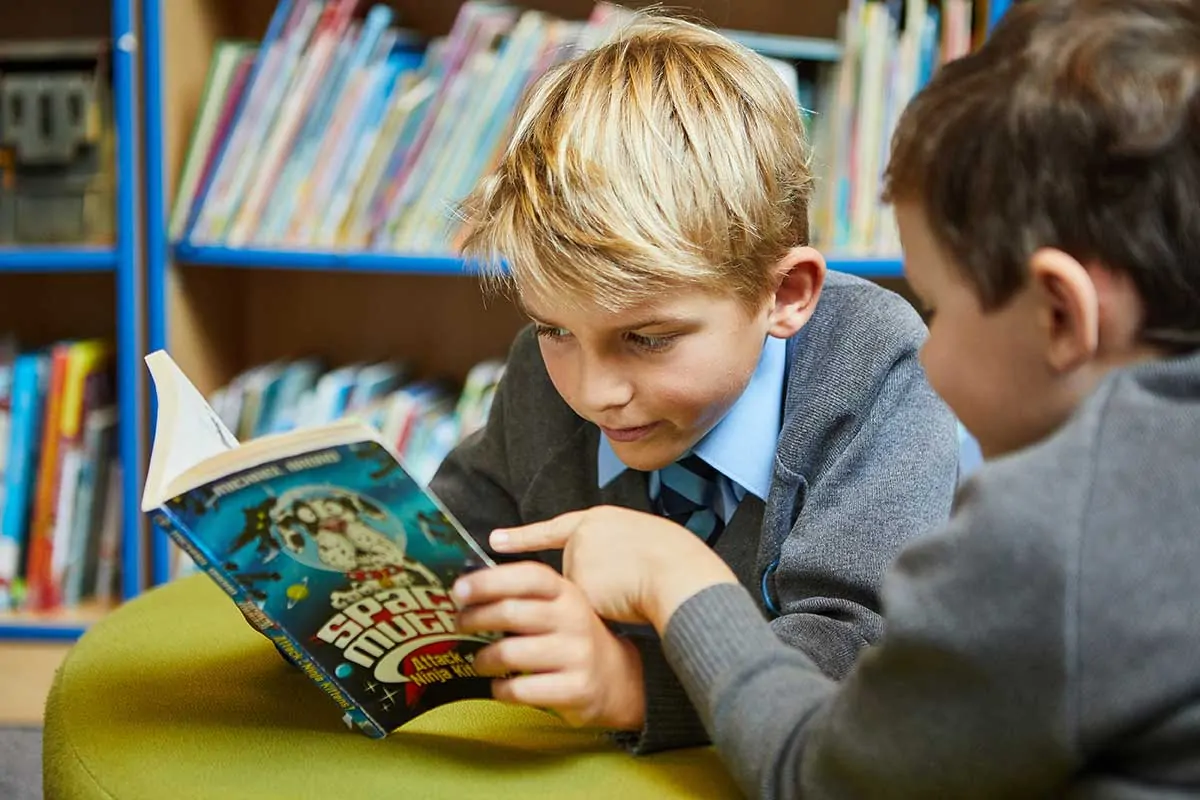
At Griffin House, near Aylesbury, the foundations for reading are laid in our Little Griffins nursery through songs, stories and listening games. From Reception, children are taught phonics every day, and as they move through the school they enjoy shared reading, guided reading and independent reading every day.
We want children to read for pleasure, both at home and at school. Reading is celebrated through World Book Day, visiting authors and inter-house reading challenges. Our small classes mean teachers can hear children read often and adapt their teaching to each child. Strong reading also lays the groundwork for later milestones, such as the Buckinghamshire 11 plus.
Frequently Asked Questions
Children start with listening and sound games in nursery, and most begin formal daily phonics lessons in Reception, at around four or five.
Use pure sounds, read the books sent home from school little and often, play sound games and keep reading stories aloud together.
Tricky words are common words that cannot be fully sounded out using the phonics children have learned so far, such as “the” and “said”. Children learn to recognise them by sight.
Every child learns at their own pace. Keep reading enjoyable and speak to your child’s teacher, who can explain how they are being supported in school.